
Mouse & Rat Control
Mouse & Rat Control you can rely on
Mouse and rat control across the UK that finds how they got in, clears them out, and seals the gaps so they stay out.
Free quote
Get a fast, free quote
Tell us what you are dealing with and we will get straight back to you, or call 0330 058 5472. No call centre.
- No obligation and no pushy sales
- Local technician, same or next day where available
- Honest, upfront pricing
Watch
See how we work
About the service
A mouse or a rat in the house is rarely a one-off. By the time you hear scratching in the loft or find droppings behind the bin, there is usually a nest, a feeding route and a hidden way in already established behind your walls. We work the problem in that order: trace the entry points and runs, treat the live infestation, then proof the property so the next animals cannot follow the same trail back in. It is the proofing that most bait-and-leave jobs skip, and it is the difference between a problem that ends and one that comes back every autumn.
Mouse or rat? How to tell what you are dealing with
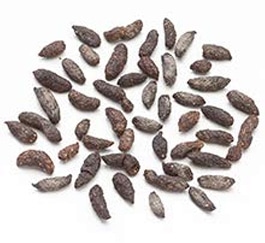
The treatment plan changes completely depending on which rodent you have, so identification is the first job. The quickest tell is the droppings. Mouse droppings are small, dark and pointed at both ends, roughly the size of a grain of rice and scattered widely along runs. Rat droppings are noticeably bigger, sausage-shaped and blunter, and tend to cluster in concentrated spots. The noise differs too: mice make rapid, light scratching, while rats produce a heavier, more deliberate scurry and sometimes a teeth-grinding chatter known as bruxing. If you are unsure, a technician can confirm the species in minutes from the physical evidence, and we genuinely do get called out to surveys that turn out to be one rather than the other.
- Mouse droppings: 3 to 6 mm, pointed both ends, spread along runs and inside cupboards.
- Rat droppings: 12 to 20 mm, blunt, dark and grouped in concentrated piles.
- Mice: fast, light scratching, often high up in cavity walls and lofts.
- Rats: heavier movement under floors and decking, plus bruxing (teeth-grinding) when settled.
House mouse, field mouse, brown rat, black rat
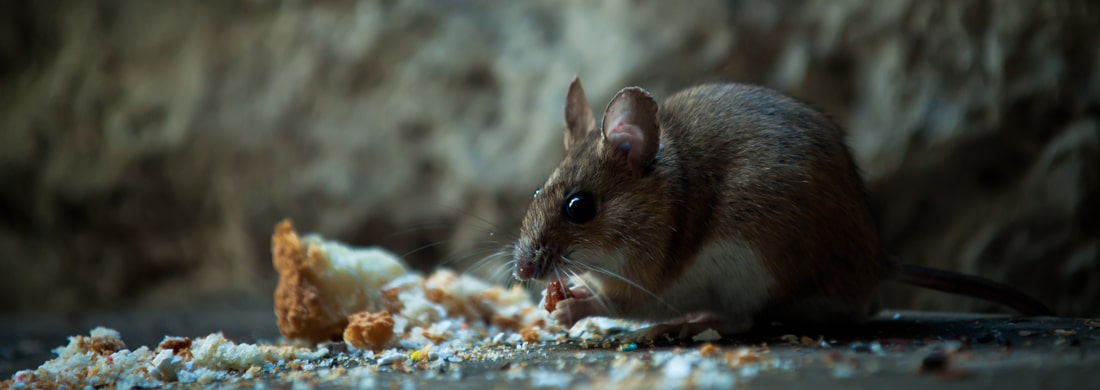
It is not just mice versus rats. The species within each matters. The house mouse turns up nationwide in town and country, has small ears and a slim tail, and squeezes through gaps a rat could never use, so it favours cavity walls, the backs of kitchen units and loft insulation. The field mouse (wood mouse) is a rural visitor with markedly larger ears and eyes for its size, and it tends to move indoors in autumn when the fields turn cold. Among rats, the brown rat dominates the UK: a cautious burrower that nests under decking, sheds, compost heaps and along drain runs before slipping in at ground level. The black rat is now rare, confined mostly to ports, and is a climber rather than a burrower, which is why it shows up in roofs and upper floors. A technician reads these differences on site and places treatment where that particular animal will actually find it.
- House mouse: nationwide, slips through a 6 to 7 mm gap, nests in walls and units.
- Field mouse: rural, larger ears and eyes, comes indoors as autumn cools.
- Brown rat: the common UK rat, a ground-level burrower drawn to decking and drains.
- Black rat: rare, port-associated, a climber that favours roofs and lofts.
The signs worth checking for tonight
Rodents are secretive and mostly nocturnal, so the evidence usually appears before the animal does. Beyond droppings and night-time noise, look for gnaw marks on skirting, cables, food packaging and pipe lagging, because both mice and rats must wear down continuously growing teeth. Greasy smear marks build up along skirting and pipework where rats run the same route on dirty fur. Nests of shredded paper, fabric or insulation appear in dark, undisturbed corners. A stale, ammonia-like smell collects under units and in roof voids. If you suspect activity but cannot confirm it, the old detection trick still works: scatter a little fine flour or talcum powder across a suspected run after dark and check at first light for foot and tail-drag prints. A change in your cat or dog, suddenly fixated on one spot of wall or skirting, is often the earliest clue of all.
- Gnaw marks on woodwork, cables, packaging and pipe insulation.
- Greasy smear marks where rats run repeated routes.
- Nests of shredded paper, fabric or loft insulation in quiet corners.
- A flour or talc test across a run, read the next morning, to confirm an active route.
Why a sighting is never the whole story
Rodents breed quickly and hide well, so the animal you saw is the visible edge of a larger group. A small mouse problem becomes a real infestation within weeks, and rats arrive in numbers rather than ones. Leaving it runs up genuine costs. Mice and rats foul far more food than they eat because they leave urine and droppings constantly as they travel, and UK rodents carry illnesses including Salmonella and Leptospirosis (Weil's disease) that affect people and pets. The damage side is just as serious: gnawed electrical cabling is a well-documented cause of house fires, and a family of rats can wreck loft insulation, pipework and roofing felt in a matter of months. For any food-related business, a single rodent sighting is enough to trigger regulatory attention. None of that improves on its own, which is why early, thorough treatment costs far less than a delayed one.
Our approach: find and proof, not bait and hope
Plenty of providers turn up, drop a few bait stations and come back a fortnight later. That trims the population for a while but does nothing to stop the next colony following the same scent trail in through the same gaps. We work it differently and in a deliberate order. First a thorough survey, inside and out, to map active harbourage, feeding routes and every point of entry. Then treatment matched to the species, the scale and the location, using trapping or professional rodenticide in tamper-resistant stations as appropriate, with consumption monitored rather than left and forgotten. Finally, and this is the stage most jobs skip, we proof the entry points: filling gaps around service pipes, fitting bristle strips to door bottoms, meshing vents and air bricks, sealing redundant pipework holes and flagging any structural repairs needed. The proofing is what turns a single visit into a result that lasts.
Proofing your home, point by point
Most rodents enter through a small number of predictable weak spots, and a few of them you can address yourself before they become a route. Gaps around cables and pipes where they pass through exterior walls are the classic one: coarse-grade stainless steel wire wool packed in and backed with expanding foam, caulk or mortar holds up well, and it is worth checking for old, disused pipework holes that were never filled. Cover vents and air bricks with fine galvanised wire mesh so the airflow stays but the rodents do not. Fit bristle or brush strips to the bottoms of external doors, which matters most in older properties where doors no longer sit snugly in the frame. Keep an eye on the roofline too: damaged roofing and open eaves let mice in higher up than people expect, so seal gaps with mesh and repair broken tiles or felt.
- Seal pipe and cable gaps with wire wool plus foam, mortar or caulk; check disused holes.
- Mesh vents and air bricks with fine galvanised wire.
- Fit bristle strips under external doors, especially in older homes.
- Repair roofing and seal eaves; mice climb and enter from above.
Making your property less inviting in the first place
Proofing closes the structural routes; good housekeeping removes the reasons rodents come looking. Store dry food in rigid, sealed containers rather than cardboard or loose bags, and clear crumbs and food waste promptly. Keep outdoor bins shut, emptied regularly and ideally a little away from the house. In the garden, trim back overhanging branches, shrubs and climbers from the walls and roofline, because mice will happily use them as a ladder, and keep the lawn mown to cut down on shelter and seed. Declutter garages, sheds and outbuildings now and then, since stacked materials left untouched for months make ideal nest sites. Where a problem clearly originates next door, raising it with your local authority is worth doing, as rodents do not respect boundary lines and a shared source needs a shared fix.
Why Mice Pest Control
What you get
We find the way in
Bait reduces the numbers; sealing the gaps ends the problem. We survey inside and out to locate the actual entry points, runs and harbourage before we treat, so the work addresses the cause rather than the symptom.
Family-run, quick to respond
We are a family-managed firm, not a faceless national. That usually means a same or next-day visit, a technician who explains exactly what they have found, and someone who will come back and fix an extra entry point without adding it to the bill.
Trained technicians, legal products
Treatments are carried out by trained pest control technicians using professional rodenticides and trapping handled within current UK rules, placed in tamper-resistant stations away from children, pets and wildlife.
In pictures
The work, up close


Coverage
Check your area
Good to know
Frequently asked questions
How do I know whether I have mice or rats?
Droppings are the giveaway. Mouse droppings are small, around 3 to 6 mm, dark and pointed at both ends, and tend to be scattered along runs and inside cupboards. Rat droppings are much larger, around 12 to 20 mm, blunter and grouped in concentrated piles. The sound helps too: mice produce rapid, light scratching while rats make a heavier scurry. If you are still unsure, send a technician a photo or book a survey, and the species can usually be confirmed in minutes from the physical evidence.
How are rodents getting into my home?
A mouse needs a gap only about the size of a pencil, roughly 6 to 7 mm, and a rat needs around 20 to 25 mm, about the size of a 50p coin. The usual entry points are gaps where water and gas pipes pass through walls, missing or damaged air bricks, gaps under external doors, holes where cables enter, redundant pipework openings left unsealed, and defective drainage for rats. Mice in particular will also come in higher up, through open eaves, damaged roofing or along branches that touch the roofline. Older properties have more weak spots, but newer builds often have unsealed gaps around utilities too.
Is rodenticide bait safe around pets and children?
Yes, when handled properly. The products we use are professional-grade and placed inside tamper-resistant, lockable bait stations designed to keep out children, pets and non-target wildlife. We site stations where rodents are actually active and away from areas of frequent human or pet contact, and we use trapping instead where bait is not appropriate. You will be told about any precautions specific to your property at the time of treatment, and we never simply scatter loose bait.
Can I just buy bait or traps from a shop and do it myself?
You can reduce a population that way, but DIY rarely finishes the job. Shop bait is sold at lower strength than professional products, snap traps catch one animal at a time while the colony keeps breeding, and rodents are wary of new objects, so the days they avoid a fresh trap are exactly when the numbers climb. Crucially, DIY does nothing about the entry points and harbourage that made your home attractive. Professional treatment is a survey, a treatment and a proofing job together, which is what actually stops the cycle.
Will rodents come back after treatment?
They can, but only if the gaps stay open. Rodents do not arrive at random; they follow scent trails, food and established routes. If the entry points that allowed the first infestation are still there, new animals will find them, often the following autumn. Proofing is what prevents that, which is why we treat it as part of the job rather than an optional extra, and why we will come back to seal an entry point we missed without adding it to your bill.
Why does the approach differ for mice compared to rats?
Because their behaviour does. House mice are inquisitive and will explore new objects readily, nesting close to food inside walls and under appliances, which makes correctly sited traps and bait effective quickly. Brown rats are larger, cautious and neophobic, avoiding anything unfamiliar for days, and they prefer to burrow outdoors before entering at ground level. Rats also have a social pecking order where a dominant animal can keep others off a bait station. A technician who reads these differences places treatment where each species will genuinely take it, rather than applying one method to both.
How long does it take to clear an infestation?
It depends on the species, the size of the population, the building and how quickly the entry points can be proofed, so there is no honest single figure. A small, contained mouse problem in a standard home is often resolved over a couple of weeks and a few visits, while a larger rat infestation with drainage issues or extensive harbourage takes longer and may need follow-up proofing. Treatments can take a little time to reach full effect, though if a technician spots an animal during a visit it is often dealt with on the spot. We give you a realistic timescale after the survey.
Do you cover rural and farm properties as well as towns?
Yes. Rural properties bring their own pressures: field mice moving indoors as the fields cool in autumn, rats drawn to outbuildings, feed stores, compost and drainage runs, and more external harbourage to survey overall. We treat detached country homes, smallholdings and outbuildings as readily as terraces and flats, and the find-and-proof method matters even more rurally, where there are simply more ways in to seal.
Which areas do you cover and how quickly can you come out?
We work across the UK, in towns and cities as well as rural areas. Because we are family-run rather than a large national operation, we can often attend the same or next day, which we treat as an emergency-style response when a sighting has clearly unsettled a household. The fastest way to get a realistic answer on timing for your postcode is to call and describe what you have found.
How much does mouse or rat control cost?
It varies with the species, the size of the infestation, the type of property and how much proofing is required, so a figure quoted blind would not be honest. We would rather assess the situation and give you a clear price than name a number to win the booking. Many domestic jobs can be given an indicative price over the phone once you describe what you have seen, with the full picture confirmed after the survey. We aim to be competitive and to avoid surprise add-ons.
Is there a particular time of year mice and rats get worse?
Autumn is the pressure point. As temperatures drop from around October into winter, outdoor mice and rats look for warm, sheltered, food-rich places to overwinter, and heated homes are ideal, so indoor calls rise sharply. Field mice in rural areas are especially seasonal in this way. Activity carries on year-round once rodents are established indoors, but autumn is when proofing pays off most, because it is the moment they are actively testing your walls for a way in.
What health risks do mice and rats actually pose?
They contaminate far more food than they eat, leaving urine and droppings across surfaces and storage as they travel. UK rodents are linked to Salmonella and to Leptospirosis (Weil's disease), both of which can cause serious illness in people and pets, with transmission mainly through fouled food and surfaces. For anyone preparing food at home, and for any food business, that contamination is the real hazard, which is why prompt removal and a proper clean-down matter as much as killing the animals.
Can rodents really cause structural damage and fires?
Yes, and it is one of the most underrated risks. A rodent's teeth grow continuously, so they gnaw constantly to wear them down, and electrical cabling is a frequent target, including inside wall cavities. Chewed insulation on live cable is a recognised cause of house fires. Beyond that, rats and mice damage water and gas pipework, shred loft insulation into nesting material, and gnaw joists and roofing felt. A rat family in a loft can ruin the insulation in a few months, so the damage bill grows the longer a problem is left.
I have seen just one mouse, do I really need professional help?
Almost certainly more than one is present. Mice breed extremely quickly and stay hidden, so a single sighting usually means a small colony is already established somewhere in the structure. Acting early is cheaper and faster than waiting: the population only grows, and the proofing required only gets larger. Even if you set a trap and catch that mouse, it does not address how it got in or how many followed, which is the part professional treatment is built around.
Do you deal with the entry points and damage, or only kill the rodents?
Both, and that is the whole point of how we work. Killing the live population without sealing the entry routes just resets the clock until the next group moves in. So as standard we identify and proof the gaps, recommend any structural repairs needed, and treat the infestation itself, rather than leaving bait and walking away. The aim is a property that is genuinely closed to rodents, not one that needs us back every season.
What can I do to keep rodents away once you have treated?
Keep the structural proofing intact and make the place unappealing. Store dry food in sealed rigid containers, clear crumbs and food waste, and keep outdoor bins shut and a little away from the house. In the garden, trim branches, shrubs and climbers back from walls and the roofline so mice cannot climb in, and keep the lawn mown to reduce shelter and seed. Declutter sheds, garages and outbuildings periodically, and if a neighbouring property is clearly the source, raise it with your local authority, because rodents move freely across boundaries.
Mice problem? We can usually be out the same or next day.
Speak to the team for a fast, free quote. No call centre.